A coffee on the way to work, a sandwich at lunchtime, a takeaway on a night when you’re too tired to cook. None of these expenses seems worth stopping to think about, and that’s exactly why nobody does. On a bank statement, they get lost between the rent and the food shop. Added up over a month, though, they often make up one of the biggest items in the budget, and the one that gets the least attention.
The aim isn’t to cut out every small pleasure. It’s to know what they really cost, so you can choose the ones you keep. In three steps.
1. Spot the small expenses
Small expenses have three things in common: a low amount, a high frequency, and a payment that leaves almost no trace, whether it’s contactless, your phone, or a card already saved in an app. The categories to go through:
- coffees, drinks and pastries picked up on the way;
- lunches and snacks grabbed on the go: a meal deal, a sandwich, a salad;
- food delivery and takeaways;
- one-off journeys: taxis and ride-hailing, rental e-scooters and bikes, single tickets;
- small online purchases, made in a few seconds from an app;
- in-app purchases in games and apps;
- whatever you pick up at the till: a magazine, a drink, a bag of sweets.
The simplest way is to take last month’s statement and highlight every expense below a threshold, say €20. To get your statements, see Track spending without linking your bank. If the statement isn’t enough (cash, payments grouped together), note them down for two weeks, as you pay.
2. Add them up over a month, then over a year
Work out what each habit costs: its price multiplied by how often you buy it. Here’s an ordinary example:
| Expense | Price | Times a month | Per month |
|---|---|---|---|
| Takeaway coffee | €2.50 | 15 | €37.50 |
| Pastry or snack | €1.80 | 12 | €21.60 |
| Lunch bought on the go | €11 | 8 | €88.00 |
| Food delivery | €24 | 3 | €72.00 |
| Small online purchase | €14 | 3 | €42.00 |
| Taxi or ride-hailing trip | €16 | 2 | €32.00 |
| Total | €293.10 a month |
That’s about €3,500 a year. These figures are an example, not an average: yours may be much lower, or much higher.
Two things almost always stand out from this sum. The coffee, everyone’s favourite example, often adds up to less than lunches and delivery: it isn’t the smallest amount that costs the most, it’s the price multiplied by the frequency. And the yearly figure is the one that makes people sit up: €2.50 says nothing, €450 a year for the morning coffee says something.
3. Choose what you keep
For each line, three questions help:
- Do I really care about it? A coffee with colleagues isn’t the same expense as the one bought out of habit on the station platform.
- Is it a treat, or a lack of planning? A delivery chosen for a good meal isn’t the same as one ordered because nothing was planned for dinner.
- What amount feels right for this kind of spending? Not zero: an amount you’ve decided on, rather than the one you discover at the end of the month.
After that, two approaches come up often:
- a monthly envelope for small expenses: an amount set at the start of the month, and an eye on what’s left of it as the weeks go by (the full method: How to make a monthly budget);
- a weekly limit rather than a monthly one: easier to follow, and the counter goes back to zero every Monday, so one bad week doesn’t spoil the whole month.
The traps that keep coming back
- Contactless payment. It’s quick, and that’s the whole problem: it leaves no time to think about it. On some statements, several small payments even show up grouped together.
- The “it’s only €3”. The decision is made one purchase at a time; the expense is paid by the month.
- Delivery costs. Service fees, delivery fees, and prices sometimes higher than in the restaurant: what you pay often comes to more than the basket.
- Cutting everything at once. Going without altogether rarely lasts more than a few weeks. Choosing what you keep lasts longer.
And with FinaPrism
Everything below is in the free version:
- Log an expense the moment you pay: the “Quick add” widget on your Home Screen, or Siri (“Add an expense in FinaPrism”), with the amount and the category.
- Do the sum from step 2 in one go: in Tools, Transaction Search filters your expenses by amount (say, €20 or less) and by period, and shows their total.
- See where the small amounts go: the Analytics tab ranks your categories, shows your “Top Merchants”, and compares this month with last month, day by day.
- Keep to an envelope: a budget on a category, or on a tag you add to your small expenses, shows what’s been spent, what’s left, and what’s left per day (Remaining per Day).
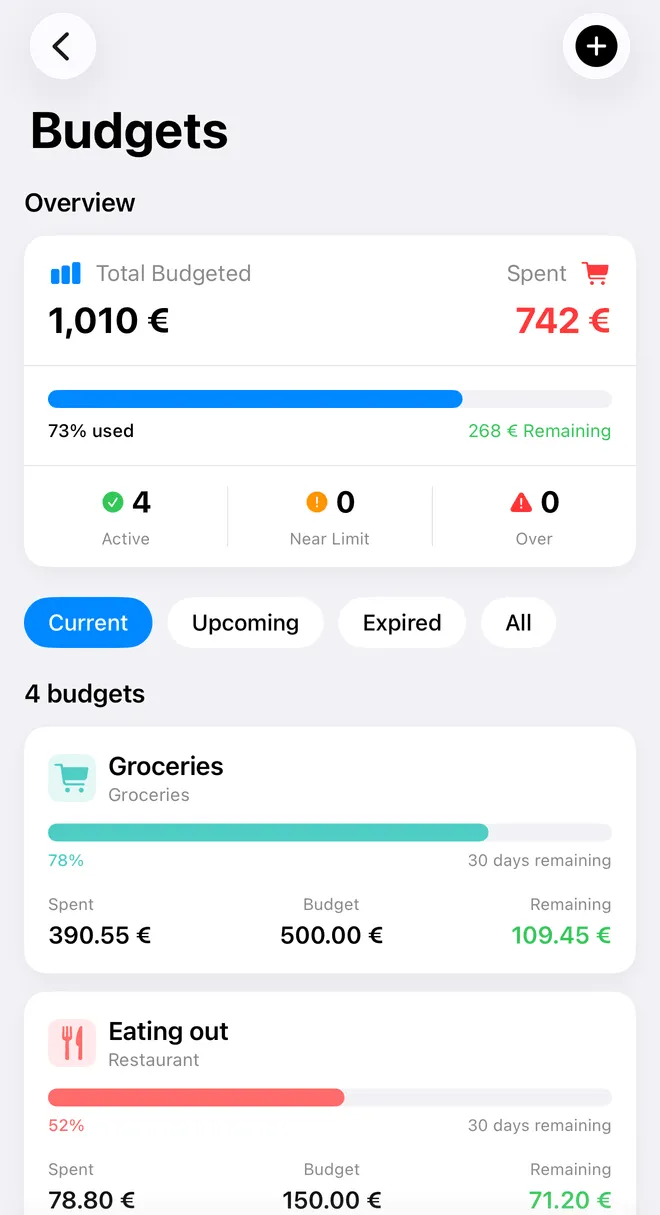 FinaPrism’s Budgets screen (demo data).
With Premium (7-day free trial), your transactions can also come in through statement import (PDF, CSV or image), without connecting your bank, and they sort themselves into their categories. No ads, no ad tracking.