December is often the most expensive month of the year, and it’s in January, when the first statement lands, that you find out. The reason is nearly always the same: there was no Christmas budget, just purchases made one at a time, each of them reasonable, without anyone ever deciding on the total.
The fix fits in one sentence: set the total before the first purchase, then keep track of it. Here’s how to budget for Christmas, in five steps.
1. Set a Christmas budget you can pay without borrowing
Your Christmas budget doesn’t start from the present list. It starts from what you can spend without going overdrawn or paying in instalments: what you’ve put aside for the occasion, plus what your November and December budgets can absorb once your fixed costs are paid.
If that figure looks too low, that’s valuable information: better to find out in November, while the list can still change, than in January.
2. List everything Christmas costs, not just the presents
Presents are only part of the bill. The rest slips into everyday spending and goes unnoticed:
- food and drink: Christmas dinner, drinks and nibbles, the crackers;
- travel to family: train or plane tickets, fuel, tolls;
- decorations: the tree, lights, candles;
- the costs around presents: wrapping paper, cards and postage;
- outfits and outings: a new outfit, the Christmas market, a show or the panto;
- small gifts for colleagues, neighbours or teachers, the office Secret Santa and last-minute presents.
Give each line an amount. Your budget for presents is whatever is left once these are counted.
3. Split the presents person by person
Make a list of everyone you’re buying for, with a limit per person. As an example, for a Christmas budget of €700:
| Item | Amount |
|---|---|
| Christmas food and drink | €160 |
| Travel | €90 |
| Decorations and wrapping | €40 |
| Presents: two children (2 × €80) | €160 |
| Presents: partner | €100 |
| Presents: parents and in-laws (4 × €25) | €100 |
| Presents: brothers, sisters and close friends (5 × €10) | €50 |
| Total | €700 |
Per-person limits avoid the most common trap: finding the perfect present for the first person on the list, and having almost nothing left for the last few.
4. Shop from the list, with a few good habits
- Buy early whatever you can, especially online: delivery times stretch in December, and last-minute urgency pushes you to pay more.
- Suggest a Secret Santa in the family or among friends: everyone gives one better present instead of five small ones.
- Be wary of buy now, pay later: it spreads the spending into January and February, and it’s credit, even when it isn’t called that.
- Don’t count the Boxing Day and January sales as savings: a discount only saves you money on something you were going to buy anyway. Bargains you hadn’t planned for are just more spending.
- Keep your receipts, for exchanges and returns. Return periods and conditions vary from one seller to another, online and in shops: check them before you buy, and ask for a gift receipt.
5. Track as you go, then get ready for next year
Note each purchase as you make it, and look at the total once a week. A line that goes over is balanced against another Christmas line, not against January’s budget.
In early January, do the sums: the real total, the lines that went over, what could have waited. Divide that total by twelve: that’s the amount to put aside each month so that next Christmas is already paid for when it arrives. The 4-step monthly budget explains how to build this kind of monthly saving into your budget.
And with FinaPrism
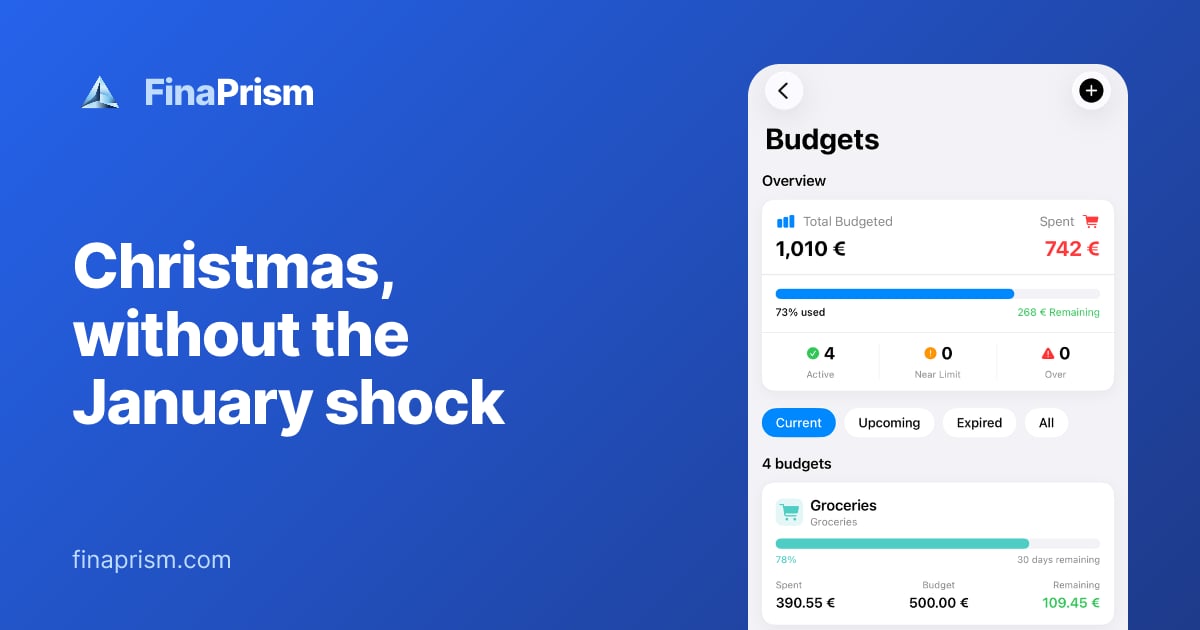
- A made-to-measure budget: in FinaPrism, a budget can cover dates you choose with the Custom period, from 1 November to 31 December for example, and follow a “Christmas” tag instead of a category. All your spending tagged “Christmas”, whether presents, food or train tickets, ends up in the same envelope, with an alert when it reaches the threshold you’ve set. It’s free.
- Receipts close to hand (Premium, with a 7-day free trial): a photo, a scan or a PDF, attached directly to the purchase, for an exchange in January or a warranty claim later.
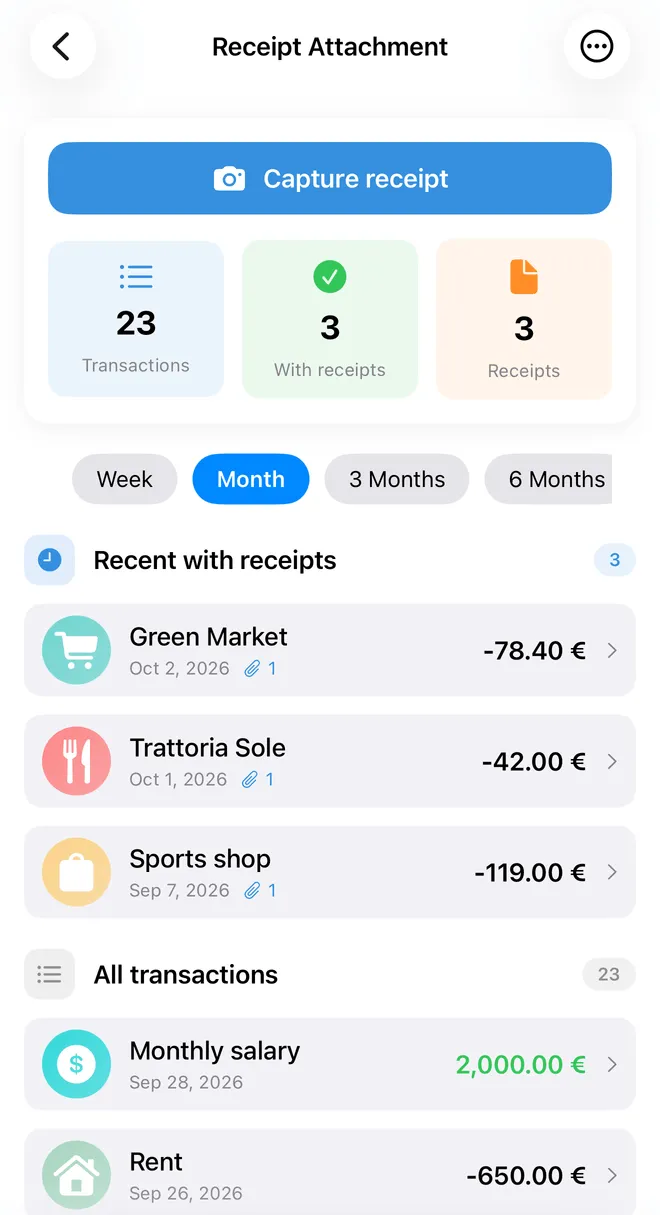 Receipts attached to their transactions, in FinaPrism (demo data).
No bank connection, no ads, no trackers.